
Commitment
Sustainability in figures, not in adjectives.
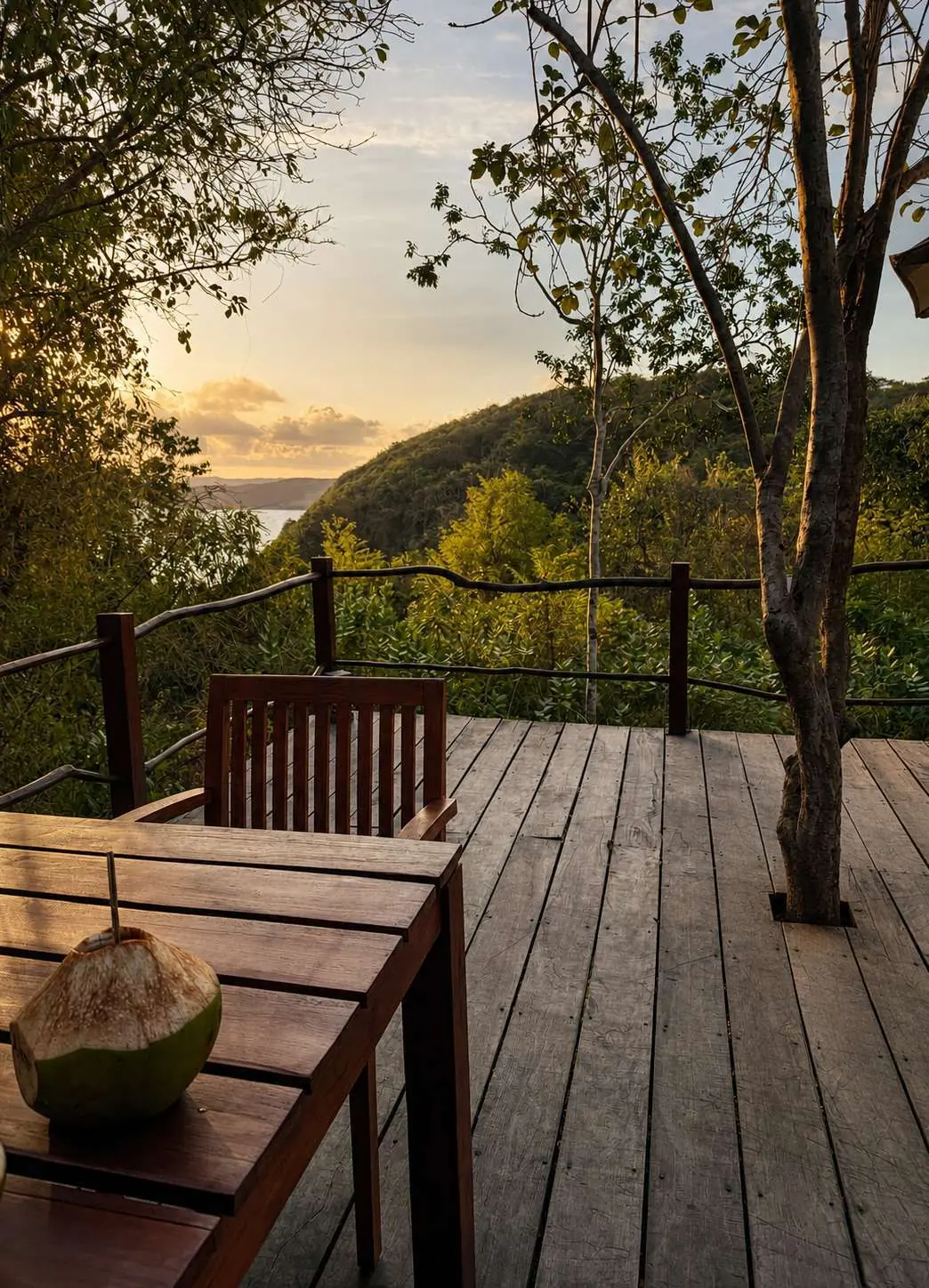
We work only with FSC® (Forest Stewardship Council®) certified suppliers, committed to the empowerment of indigenous communities and to the protection of the forests.
The decision that shapes everything
We don't sort our timber by species. We sort it by colour.
Every piece of tropical hardwood has a colour of its own and no knots. That is why we organise the range by dominant colour, based on the scientific classification of CIRAD, the French agricultural research organisation for development.
It is the consequence that matters: diversifying the species relieves the pressure on the most sought-after ones. A market that always asks for the same three timbers exhausts those three timbers. Spreading demand across several species of the same tone helps respect the pace of the forest and preserve biodiversity.
Protecting biodiversity is a key commitment for the balance of ecosystems, and that means managing the forests sustainably.
Tropical hardwood
Lasting without chemicals.
With densities above 800 kg/m³, the timber needs no treatment to guarantee its durability. It stands up to time, to use and to extreme weather.
01
Natural durability
With densities above 800 kg/m³ it needs no treatment to guarantee its durability. It stands up to time, to use and to extreme weather.
02
Natural resistance
It resists moisture, fungi and insects naturally, with no need for chemicals or toxic treatments. Use classes 3, 4 and 5: suitable for contact with water.
03
Colour and traceability
Every piece has a colour of its own and no knots. That is why we organise the range by dominant colour, based on CIRAD's scientific classification, helping to respect the pace of the forest.
Responsible management
We work only with FSC®-certified suppliers committed to sustainability, contributing to the empowerment of indigenous communities and to the protection of the forests.
We diversify the tropical hardwood species to relieve the pressure on the most sought-after ones, contributing to the conservation of biodiversity in the forests.
Bamboo
A resource that comes back in seven years.
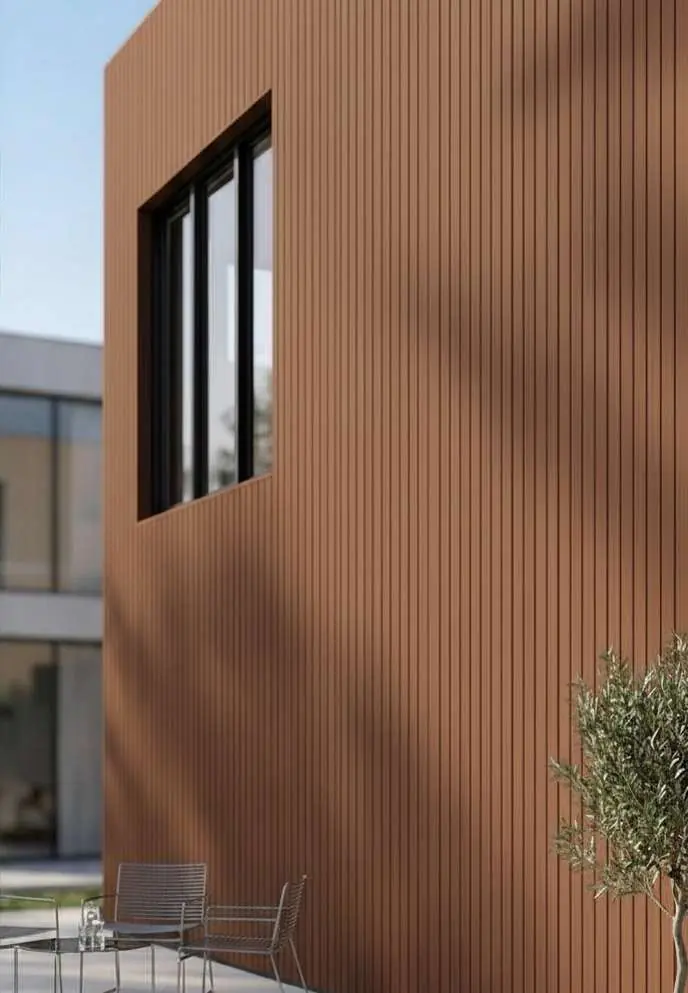
Bamboo's fast regeneration, with growth cycles that can reach maturity in about seven years, makes it a renewable resource of particular interest for architecture and design.
High-density bamboo products, above 1,000 kg/m³, offer a compact, stable structure, ideal for high-traffic areas and outdoor settings.
- No residual nutrients. The POLAR process exposes the fibres to 210-220 °C for up to twenty hours: it strips out what would feed fungi and insects and gives bamboo its dark brown colour.
- Fewer micro-organisms. The treatments improve resistance to moisture and reduce the risk of fungi taking hold, even in humid climates or coastal areas.
- FSC® certification on every bamboo product.
WPC composite
Nine parts in ten already existed.
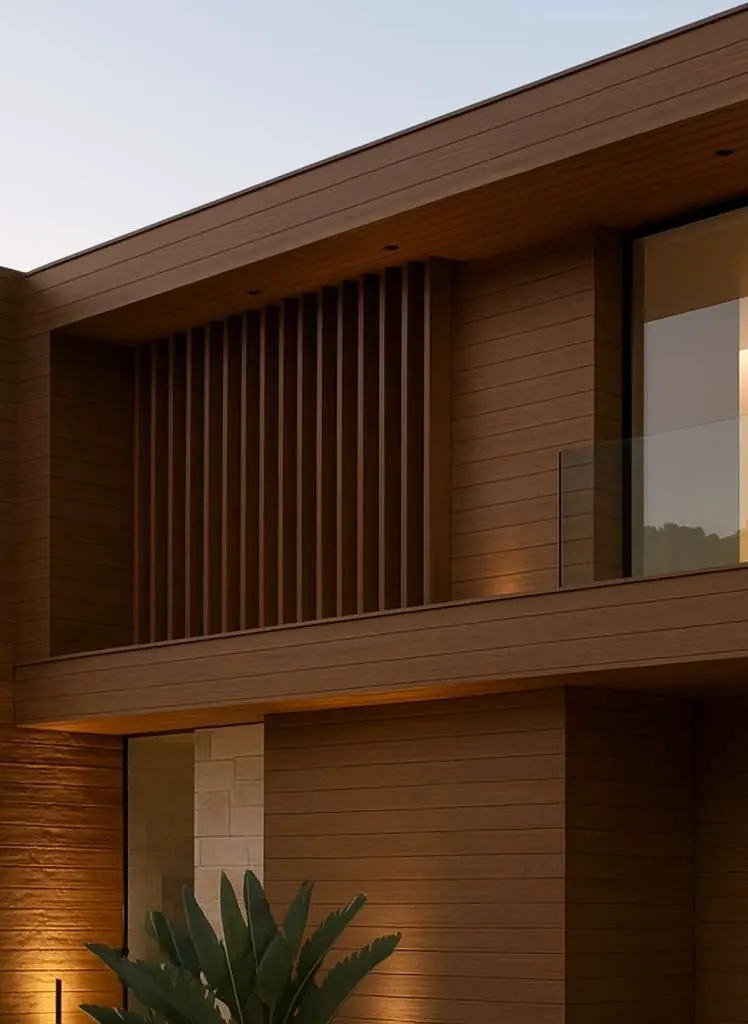
Mibacomp's composite doesn't start from virgin raw material: the fibre is FSC®-certified recycled wood flour and the polymer is recycled plastic.
And what you save afterwards counts too: it needs no sanding, oiling or routine protective treatments, which cuts the upkeep significantly over its working life.
It keeps its original colour through up to three years of sun exposure without cracking or going dull, and being waterproof and dimensionally stable it doesn't absorb water or warp.
Maintenance
What lasts, lasts because it is looked after well.
Three materials, three different routines. None of them complicated, and in two of them the grey patina is an aesthetic choice, not a fault.
Tropical hardwood
Regular cleaning with water and pH-neutral soap to clear dust, leaves and dirt. Never a pressure washer: it can splinter the timber.
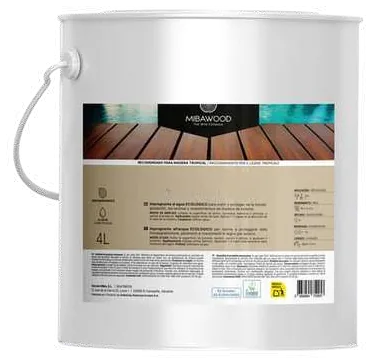
- MibaProtect. Oil in neutral or walnut that protects and restores the original colour. Several applications a year, depending on the climate and the exposure.
- MibaRenew. A reviver that strips the grey. It doesn't bring the original colour straight back: it removes the surface greying and leaves the timber a pale, almost whitish tone. MibaProtect then rehydrates it and brings back the natural or walnut colour.
- The grey patina is not a defect. Like any natural timber, left unmaintained it will develop a grey patina. It is a completely natural process and it does not affect its structural performance.
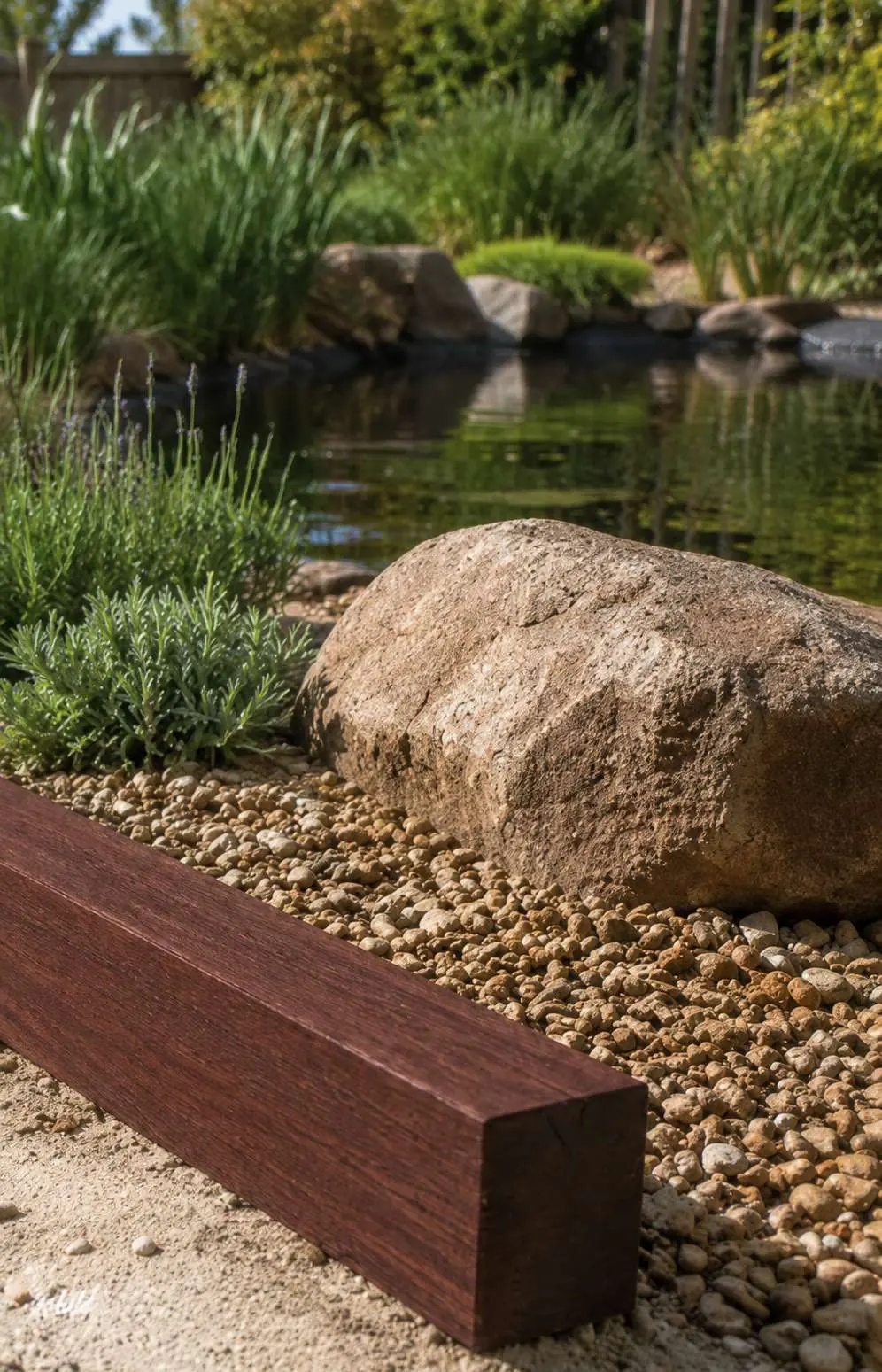
- The sleepers need no maintenance. Exposed to the sun they turn grey, and there they stay.
Bamboo
Densified bamboo is designed for low maintenance. Water and pH-neutral soap are enough for routine cleaning; a pressure washer is best kept off the surface.
Over time, exposed to sun and rain, it will develop a natural patina that shifts its tone slightly, without affecting its mechanical properties. To keep the original colour for longer, apply oil made specifically for outdoor bamboo several times a year.
WPC composite
Minimal maintenance: regular cleaning with water and pH-neutral soap or a mild detergent, clearing leaves, dust and built-up dirt.
- Clean stains off as soon as you can.
- Keep the gaps between boards clear to help the drainage.
- It needs no sanding, oiling or routine protective treatments, unlike natural timber.
MibaProtect and MibaRenew
Two products, and the order matters: MibaRenew first to take the grey off, then MibaProtect to rehydrate and bring the colour back.
Miba Global
Where experience turns into innovation.
And our products into the solutions of the future.